It’s time for Apple to introduce the iPod Neo
Why must all our devices be connected and have screens? What’s wrong with dumber, smaller, cheaper, gadgets that do one thing well? Like the iPod Shuffle?
The original idea
Small, light, affordable, iPod Shuffle was a great little music player you didn’t mind carrying anywhere with you.
It carried music and podcasts, rather than personal data, which made it a great little solution for travellers passing through over-zealous border controls. Apple sold over 450 million iPods across the life and iterations of the product, including tens of millions of the tiny fourth-generation iPod Shuffles.
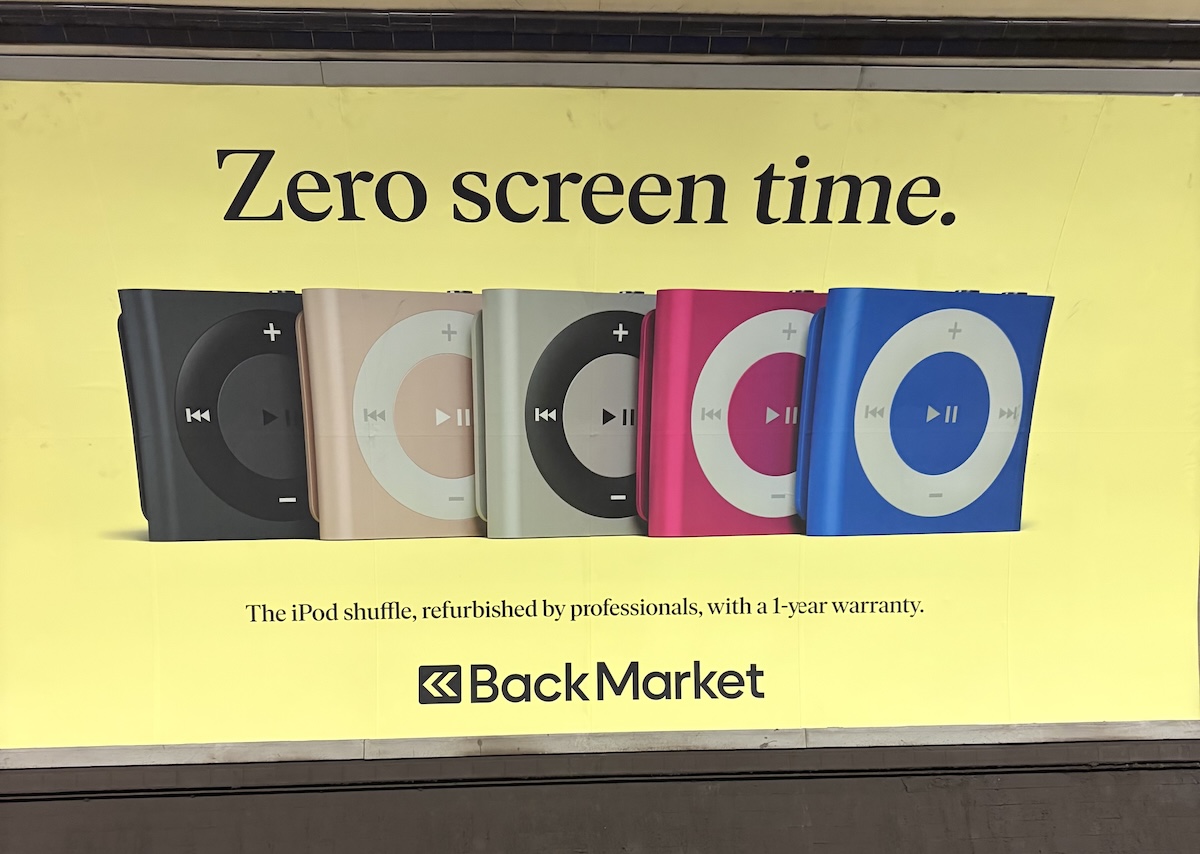
These small devices were pretty basic. Available in eleven colors across the life span of the devices, they carried just 2GB memory, used USB 2, had an iPod click wheel haptic control panel and used a headphone jack. Apple sold the product for five years.
Return of the iPod
Now it’s back. If you travel in London you’ll have come across an ad campaign from online refurbished tech marketplace, Black Market featuring the device with the tagline, “Zero screen time”, which is the whole point.
Just like vinyl, there’s growing demand for products that aren’t connected, don’t use AI, don’t have screens to tempt us into social media doomscrolling. People want gadgets they can carry around with them without worrying about making an insurance claim if they get lost or stolen, without being concerned for data hacking, blue-jacking, or data privacy.
In this case, they just want to load up their playlists, sit back, and listen to their music using a pair of cheap headphones. The fourth-generation iPod Shuffle even played lossless audio – though you’d only cram around 60 lossless tracks on the device. Apple later discontinued the entire iPod range as it rolled these features into its other, connected, mobile devices.
Black Market told ITV it has seen huge demand for these products, with 453% year-on-year increase in the numbers sold. eBay reports similar demand, with searches for classic iPods increasing 31% between Jan25 – Jan26 – interest was highest in ‘classic iPods and other third-gen models.
“Rather than always looking for the latest device, there’s a growing appreciation for products that do one thing really well, whether that’s an iPod for listening to music without distractions or a digital camera that encourages you to be more present in the moment,” a spokesperson for the online market told ITV News.
What a 2026 iPod could look like
That’s fine if you’re looking for a retro device, but in many ways the tech has advanced a lot since then. Here’s some ideas for a follow-up device Apple could actually build. Let’s start with equivalence: what might the equivalent of a screen-free, pure play music player be today? What device is close to it in size and could be made a little smaller to provide the same functionality?
I can see it as about the same size but thinner than an Apple Watch. It may (but doesn’t need to possess) a small monochromatic screen for time, track, artist, and album info. It would have less battery but could conceivably include Wi-Fi and Bluetooth to support wireless headphones and Apple Music.
Wireless connectivity may not be necessary, as the device would sync over USB-C with a computer or iPhone and carry a small amount of memory for the tracks. It could use a similar ClickWheel to the original.
For many users, it would be a device they sync at home to carry with them, and something adults might give their kids to use, particularly if it had built-in AirTag functionality.
Kids get access to music and podcasts wherever they are, along with location if they get lost. They also won’t be subjected to social media bullying, distraction, or screen addiction.
But the same applies to commuters.
Listen to the signal
I think something like this may prove popular, particularly since interest in second hand models is so high. The beauty of iPod was it captured the digitally adventurous spirit of the time.
These days we’ve become far more cautious in our digital lives, mainly because we’ve had to become so.
The popularity of iPod Shuffle on second user markets isn’t about nostalgia; it is instead a clear market signal – and feels like one Apple could listen to. The company that taught us to stare at our iPhones has the potential to release something to make us look up again.
You can follow me on social media! Join me on BlueSky, LinkedIn, Mastodon and subscribe to The Core.