Is Apple about to revolutionize how we connect, again?
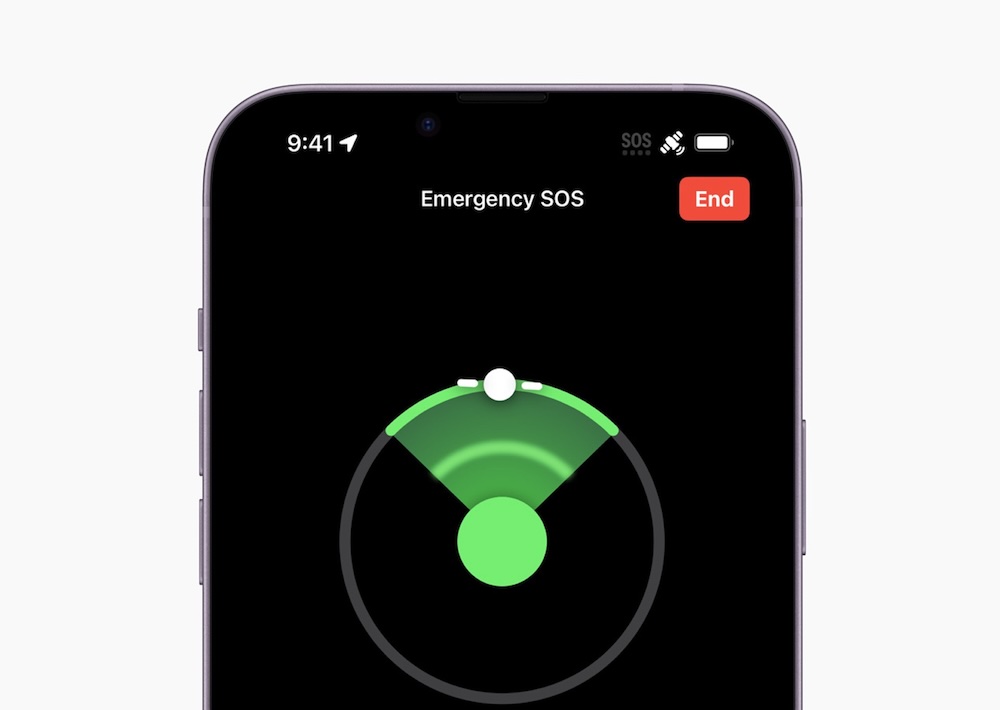
One thing we’ve not heard so much about in recent months concerns Apple’s plans for satellite communication using iPhones. Which is to say, we’ve had some small piece of news, including the extension of free access for iPhone 14/15 users until November this year, but that’s it.
That’s why the latest rumor seems worth discussion.
Before we glance at that rumor, a little background:
Just the basic facts
Apple offers a collection of satellite services that you can access from your iPhone. These include emergency, roadside assistance and messages via satellite. Introduced with iPhone 14, these services are supported by GlobalStar and have always seemed to have more potential to them, including for Starlink-like general purpose communications. Apple has not done this, opting to offer a small collection of useful satellite-based services.
Apple also makes the modem used to communicate with those satellites, the C1. More widely recognized as Apple’s self-made 5G modem, this radio also handles satellite connection.
What’s interesting is if the next generation of that modem might be more efficient at handling satellite-based communications – more capable of keeping a connection when used like a phone and moved around, for example. (I don’t think space tech is quite ready for that at this time, so don’t expect too much yet).
What’s the claim?
Apple has spent years creating the C1 component, so it makes sense to expect a C2.
The latest speculation from a leaker in China claims Apple’s next modem will introduce support for New Radio Non-Terrestrial Networks (NR-NTN) connectivity.
That’s not especially surprising given Apple already supports an earlier implementation of this on iPhones but any upgrade likely still means Apple devices equipped with that modem may be able to more easily connect to LEO satellites to get online.
That’s important, of course, as LEO is the kind of constellation GlobalStar, Starlink, and everyone else leans into. All of this makes sense, as Apple has been thought to be moving in this direction for some time, as GSM Arena confirms.
But what makes the speculation worth speculating over is that Apple has spent a huge wedge of cash on putting a new constellation of advanced satellites up in the sky with GlobalStar.
Birds in flight
Apple committed $1.7b to Globalstar for iPhone satellite in 2024, and has I think invested more since then. It also accounts for 63% of Globalstar’s revenue, according to the space company’s most recent financial report.
Globalstar’s most recent financial report shared a little more information on that work, clarifying the ongoing agreement is to “to deliver expanded services to the Customer over a new MSS network, including a new satellite constellation, expanded ground infrastructure, and increased global MSS licensing (the “Extended MSS Network”) for the Services provided over the Extended MSS Network.”
The Extended MSS Network is designed to deliver enhanced, direct-to-device (D2D) satellite connectivity for future iPhone models. It consists of a new satellite constellation, expanded ground infrastructure, and increased global licensing to provide satellite SOS and messaging services. An interesting letter shared with UK regulator, Ofcom sheds additional light.
We may learn more about how and where the money is now being spent at the end of February 26, when Globalstar’s annual report is expected.
Iterate, innovate, improve
Apple built its original set of satellite services using Globalstar’s then existing LEO satellite constellation of 24 satellites, but both companies have been working to expand this provision. As new satellites hit the skies, Apple has been able to extend these services to additional nations.
Globalstar, meanwhile, builds up infrastructure, of course including satellites, but also encompassing ground-based base stations to act as portals. In recent months, the company has invested in earth stations in Estonia, South Korea, Alaska, and a major expansion in Brazil.
Now I’m not going to speculate any more here, except to point out that there is a chance that the new Apple modem will be much better at handling satellite communications and should begin shipping in iPhones at around the same time as Globalstar’s newly-made satellites hit the skies.
That conjunction between new phones and new satellites could mean something and (while harder to believe) could mean nothing. I’m not going to predict the nature of what is planned, but the story is most certainly becoming a space to watch.
You can follow me on social media! Join me on BlueSky, LinkedIn, and Mastodon.