M1 MacBook Air performance data has already been eclipsed – by Apple
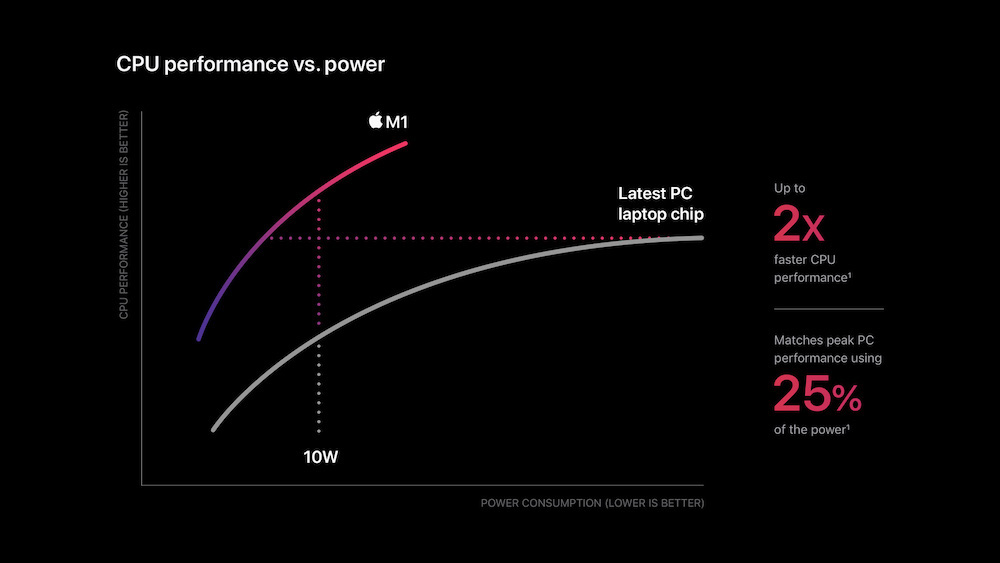
This graph tracks processor performance against power
Most people seem pretty stoked at the amazing performance data we’re beginning to see appear on Geekbench for the new Apple Silicon M1 MacBook Air – but we’re really only scratching the surface of what to expect from Apple’s latest Macs.
Apple has a road map here, and it’s obvious.
Seven versus eight
There are two reasons I believe this.
Reason 1: The entry level MacBook Air has seven active cores in the M1 processor it is using. The also announced 13” MacBook Pro and Mac mini both use eight.
Reason 2: The MacBook Air has no fan at all, both other devices have built-in cooling systems/fans.
What does this mean?
Let’s take a look at the data everyone is so very excited about.
It consists of Geekbench tests purported to represent the (higher edition, 8-core) MacBook Air. It scored 1,687 in single-core and 7,433 for multi-core performance. In comparison, the Intel i5-based 13” MacBook Pro achieved 4,399.
It is worth noting that – in raw performance terms at least – this also means the M1 Air delivers single core performance higher than all the other Macs Apple currently provides and in multi-core only slightly lags the late 2019 Mac Pro.
It is important to think a little more on this. Apple’s MacBook Air has achieved these impressive performance figures on the basis of the M1 chip working in a fanless chassis. That makes it logical to assume Macs with fans will deliver even greater performance.
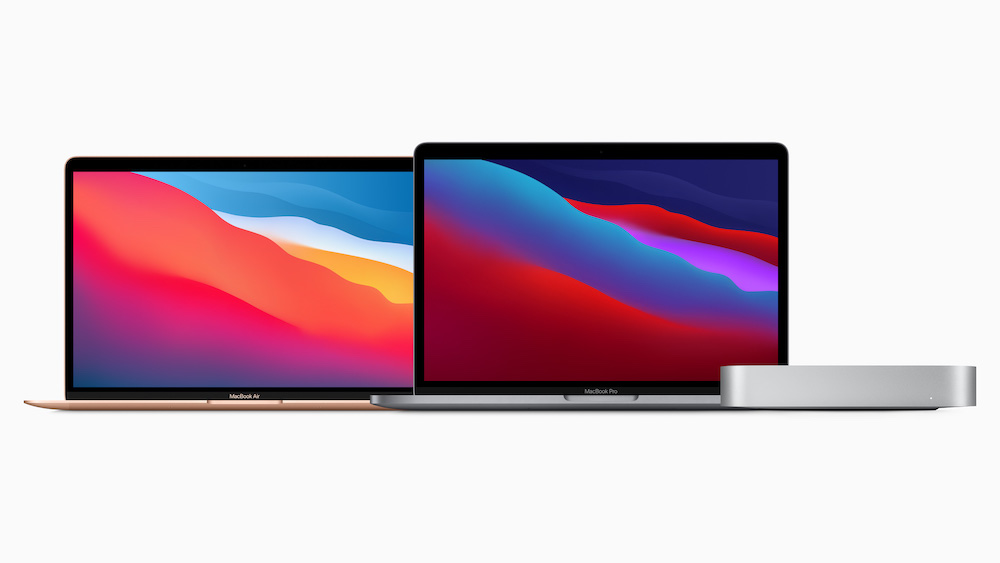
Apple’s first M1-powered Macs include a MacBook Air, MacBook Pro and Mac mini
Apple did tell us
Apple told us this is the case. During its One More Thing keynote presentation, it shared a bundle of performance nuggets concerning the M1 processor:
- Up to 3.5x faster CPU performance
- Up to 6x faster GPU performance.
- Up to 15x faster machine learning,
- Twice the battery life.
- The 8-core chip can run up to 25,000 threads simultaneously.
- The M1 delivers “the world’s fastest integrated graphics in a personal computer,” said Johny Srouji, Apple’s SVP Hardware Technogies.
Looking at the performance data for what is arguably the least optimized M1 Mac model in Apple’s current range, it’s pretty clear (a) that the other models will deliver even more power/performance and (b) Apple still has upside to optimize performance moving forward.
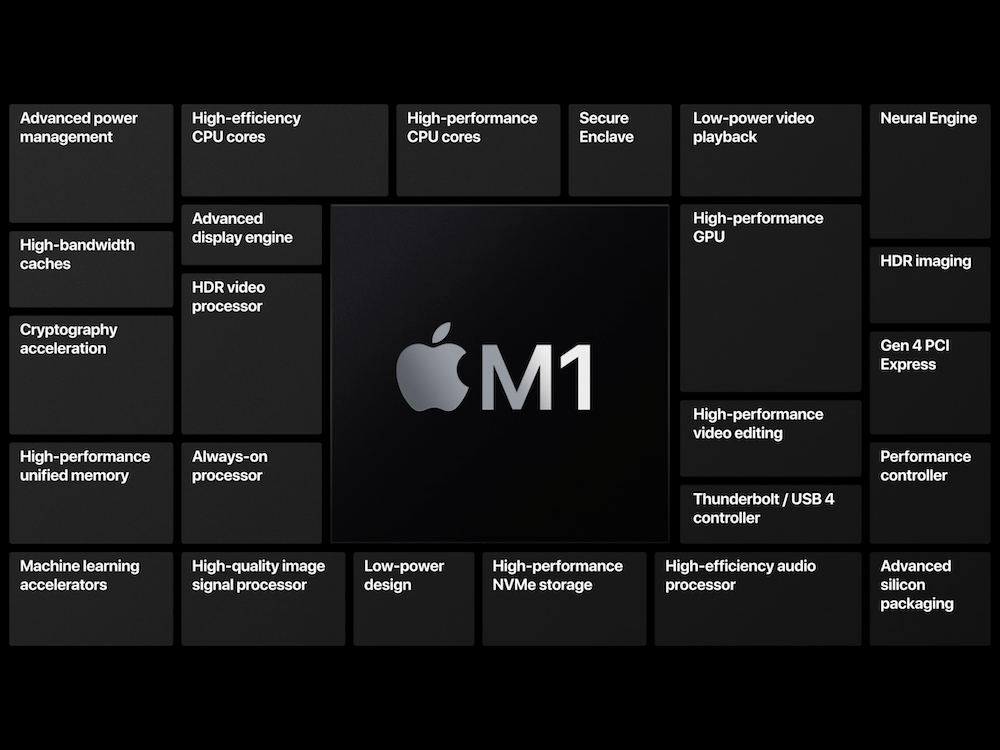
M1 chip Apple claims
Apple becomes chip industry leader
Frankly, Apple now has a road map for chip development that is both already ahead of the industry and will remain that way for the next decade. This is so true there’s already attempts at push back.
Indeed, Apple itself says it was surprised by this achievement.
Apple executives admit they ‘overshot’ with M1
Speaking with the Independent, marketing chief Greg ‘Joz’ Joswiak, software boss Craig Federighi, hardware engineering leader John Ternus touched on this.
“We overshot,” says Federighi. “You have these projects where, sometimes you have a goal and you’re like, ‘well, we got close, that was fine’.
“This one, part of what has us all just bouncing off the walls here – just smiling – is that as we brought the pieces together, we’re like, ‘this is working better than we even thought it would’.
“We started getting back our battery life numbers, and we’re like, ‘You’re kidding. I thought we had people that knew how to estimate these things’.”
Given that these processors can yield even higher performance if given enough thermal capacity, just how much can we expect from future Apple Silicon powered Mac Pro’s, by the way?
Because this road map looks pretty good to me.
Please follow me on Twitter, or join me in the AppleHolic’s bar & grill and Apple Discussions groups on MeWe.