97% faster in five years: Apple’s silicon revolution
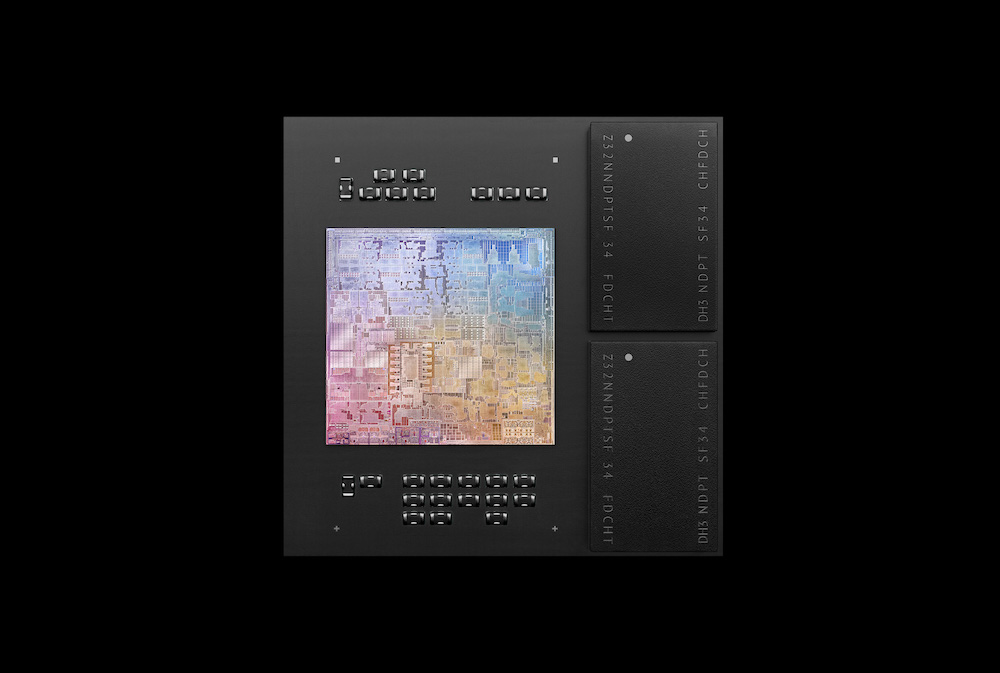
The introduction of Apple Silicon in Macs was a seismic shock, one which completely transformed the Mac’s traditional place in the PC industry. The platform, always a favorite among consumers and creative pros immediately became a powerhouse for any kind of professional work.
It mattered that the first M1 Macs speedily overtook the best equivalent Intel chips significantly, particularly as Intel had spent five years grappling to improve its manufacturing process nodes. Apple’s move to M-series chips and TSMC leap-frogged everyone.
Apple speeds its speeds speedily
For the most part, the industry continues trying to catch-up.
It’s going to continue trying, as this weekend’s big rumor is that the company intends introducing its first M6 systems by the end of the year. Given each generation of Apple’s new Mac processors have added roughly 15–25% multi-core performance that means a lot.
It means today’s Macs are incredibly performant just in terms of the chips – even as the platform continues to benefit from all the lessons Apple learned concerning optimization across the Intel and Power PC years.
Running SoC’s lends its own set of advantages, the overall impact of which is that you get to enjoy highly performant machines with astounding battery life, super-low failure rates, low energy demands, all of which are built to last for years.
Look at the evidence
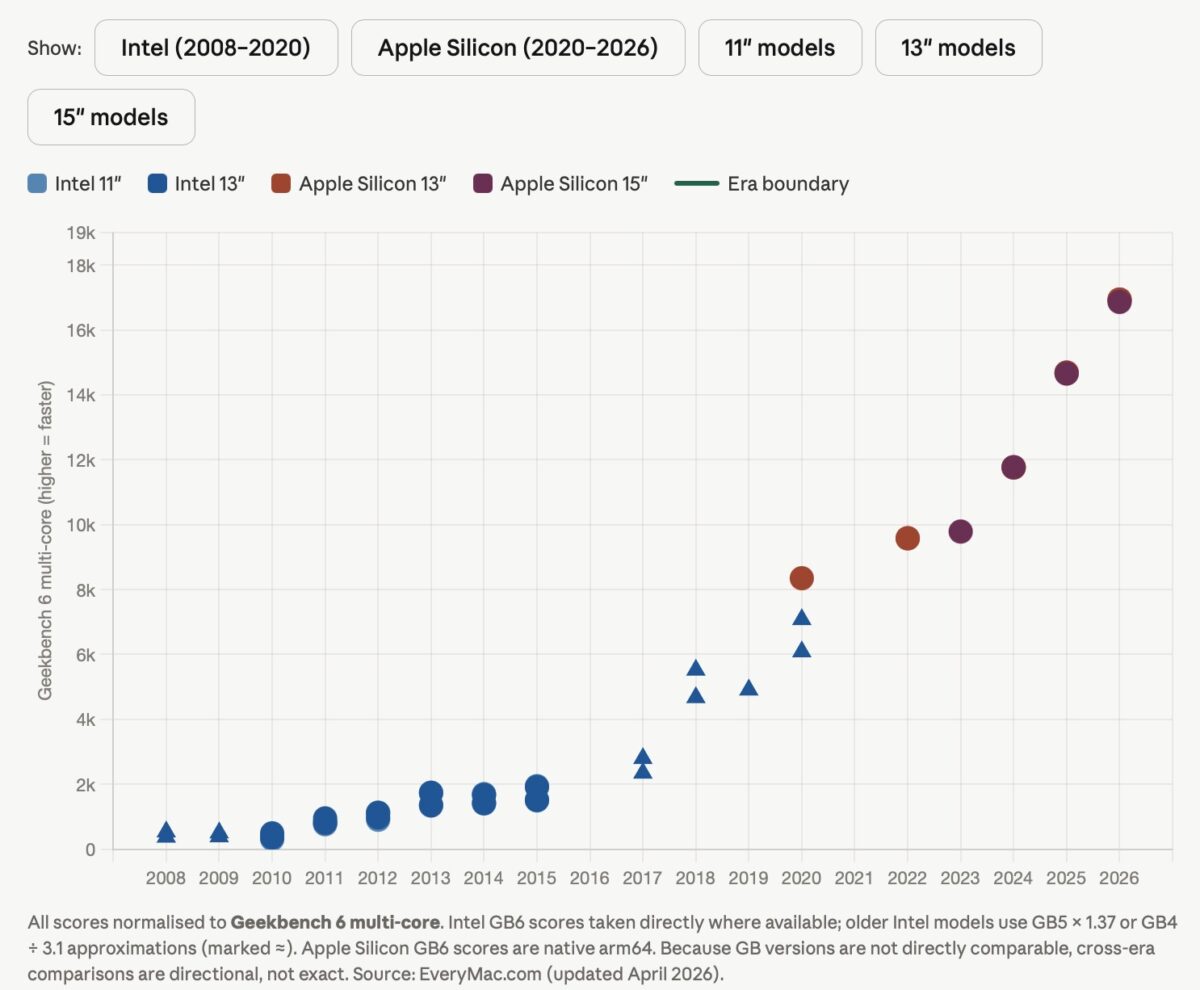
Look at the approximate data based on normalized MacBook Air models and Geekbench scores.
- The move to M1 to M2 generated a 15% performance gain.
- The move to M2 to M3 generated a 23% performance gain.
- The move to M3 to M4 generated a 25% performance gain.
- The move to M4 to M5 generated a 15% performance gain.
The M5 (released earlier this year) now scores ~16,900 on multicore performance, approximately 3.3x the performance of the best Intel-powered MacBook Air ever made.
Help the Apple Must server fund – subscribe to our daily newsletter, or take out a paid subscription to support us most. It would make us smile.
What does this mean to you?
We already know what it means to pro users: Macs that can easily support pro workflows, AI model creation, deep data analysis and more. It means the same to consumers, who get to use machines equipped with the kind of computational power that would have been beyond their reach in the PC age.
But it also means one more thing – look at those performance gains. Think what they represent. Compound those gains and you’ll see that Apple has delivered an astonishing c.97% performance increase in Mac processors since late 2020.
Given most of us use a computer for about five years before we upgrade, it means anyone moving from an M1 Mac will experience incredibly significant gains.
The road map supports the platform
But that’s not the only thing – because the consistency of Apple’s processor journey since 2020 makes it reasonable to anticipate it will continue to maintain that path. That means that if you buy a Mac now, the one you upgrade to in five years will deliver similar performance gains.
That matters a lot to anyone purchasing a new computer. It matters that you’ll experience tangible benefits. But it matters even more to enterprise users considering a move to Apple’s platforms. They now know that the systems they invest in will already be good, delivering benefits across the board from energy to TCO. They know this, and they are acting on this, with Apple’s enterprise market share racing toward 30% in the US.
But enterprise purchasers should also now recognize that Apple will be able to provide them with equally significant benefits when it comes to upgrading their fleet in five years’ time. And, as the above graph shows, those benefits absolutely exceed those achieved during the Intel/PowerPC years. Apple isn’t just fighting the competition in today’s New PC world. It’s defining it.
You can follow me on social media! Join me on BlueSky, LinkedIn, Mastodon and subscribe to The Core for daily, human-curated Apple news summaries.